Thursday, September 13, 2012

MY SON'S RUNNING IS FOR THE BIRDS


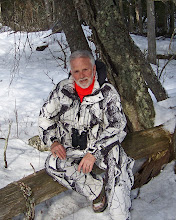
Jean & I at one of his races

My eldest son Jean has been running in races for 8 years, for fun and staying in shape.  He has participated in over 75 races, 7 being at least marathon distance.  This summer, Jean has taken on a running, service project to raise funds for Wild & Free, an animal rehabilitation center in Garrison, Minnesota.  


As a three year old he could look at a bird book and identify most of the common song birds of our area.  His baby sitter once said to him as she looked out on the lawn, "Look Jean, a birdie."  Jean replied, "No, it's a robin."  His love and knowledge of birds and animals has always been a special part of his life.  So it wasn't surprising to me, that Jean came up with this great and unique fundraising idea.


On October 27th he is running the "Surf the Murph 50K Ultramarathon."  It is a trail race in Savage, MN and it will be Jean's second ultramarathon.  His original goal was to raise one thousand dollars for the Wild & Free rehab center.  As the news got out, the thousand dollar goal kept rising.  Friends and relatives opened their hearts and wallets; plus the Pfizer Animal Health Company offered to match funds up to $5,000.  Now the fundraiser has mushroomed to a grand total of $5,215 and hopefully the new goal of $6,000 will be reached by October 27th.


The Wild & Free story in Jean's words:  "Wild & Free is a non-profit wildlife rehabilitation center in Garrison, MN that is near and dear to my heart.  They take in injured and orphaned birds and animals in and effort to rehabilitate, care for, and release them back into the wild, and they are dedicated to wildlife and habitat education.  I have been a supporter of theirs for a number of years now, and a barred owl, great-horned owl, and an American white pelican that I helped sponsor are now back in the wild thanks to these people.  They do extraordinary work."

I can personally testify to their extraordinary caring for sick and injured animals.  A few years ago I had a gray fox den on my property with a litter of four kits.  Unknown to me, the mother disappeared and the kits were left on their own without nourishment.  During a rainstorm I found one of the kits had wandered up and died on my lawn.  That morning I searched for the other kits and found two.  I tried to feed them the best I could, but one of the kits died that night.  


With the help of my daughter in law Blythe, I decided to take the last kit to Wild & Free to try and save him.  We made the 200 mile trip to the rehab center and dropped off the kit.  Over the following week I called each day to find out the condition of the kit.  Unfortunately the kit was too far undernourished and did not survive, but I have never forgotten the caring the staff of Wild & Free showed in trying to save the little gray fox.  

I was saddened by the loss of the little gray fox, but on a positive note, I learned about all the many injured animals and birds Wild & Free has saved... around 350 orphaned or injured a year, released into the wild when healthy enough.  

A recent Wild & Free triumph was a release of a bobcat May 15th.  The bobcat was brought in this January with a diagnosed concussion, it was thought he was hit by a car in Hermantown, MN.  Rather than letting authorities put down the bobcat, the residents took the animal into their care and brought it to Wild & Free.  

The heart-warming story line here is, injured animals come to Wild & Free and they are fed and taken care of, then released when good health is achieved.  Animals that aren't set free because of the inability to take care of themselves usually go to a zoo, endangered animals are taken to breeding projects.

I am extremely proud of Jean's efforts in raising funds for Wild & Free.  When Jean crosses the finish line on October 27th the animals of Wild & Free will be the winners.  

If you wish to contribute to the Wild & Free fundraiser Jean's website is:


"Our treatment of animals is important to our own internal state. If we are to expand our horizons, to grow to understand what the relatedness of each and every thing means, then our love and appreciation of all life is essential. Our respect and reverence for all living things will be reflected in our own living." - Bill Schul (Author of The Psychic Power of Animals)


Monday, August 13, 2012

THE BIRD TREE

The older I become, I feel the progression of my age dictates a speedy passage of time.  Where has the summer gone?  It seems I was just photographing spring Wood Ducks, Sharp-tailed and Ruffed Grouse and here it is the middle of August.

This last week in my forest travels, I began seeing a growing influx of wood warblers in their returning migration.  Summer is over for many birds as they are on their way back to winter havens.  I have watched dozens of Nashville, Chestnut-sided, Tennessee, Northern Parula, Black-throated Green and Blackburnian Warblers stop here feeding on insects.


Mourning Warbler

Tennessee Warbler

Northern Parula Warbler

Northern Parula Warbler

Chestnut-sided Warbler


On August 3rd, it was a particularly interesting day for observing birds on Cedar Ridge.  My usual hike up the ridge had not produced many birds to photograph and after hand feeding a few of my chickadees, I returned home.  I pulled up a chair on the front lawn, off to the side of my bird feeders, to watch the Purple Finch and American Goldfinches.  There were a dozen or so, who crowded the trays eating hulled sunflower and niger seeds.  I must add, our front lawn is quite unique, as it is located a stones throw from the Superior National Forest.  We haven't the slightest idea what flies or bounds through our yard during any season.  So I was not totally surprised to see a colorful display of warblers flitting around in our huge white cedar tree.


Purple Finch

American Goldfinch

American Goldfinch

I sat there for about a hour and a half.  During that time I saw nine different warbler species and a total of twenty one species of birds.  It was a marvelous display of colorful poses as the cedar branches make for attractive photographic backgrounds.


Magnolia Warbler

Canada Warbler

Black-throated Green Warbler

Blackburnian Warbler

Black & White Warbler


Bay-breasted Warbler

American Redstart

What is interesting to me observing warblers, is their innate curiosity of other birds in the area.  I have eluded in other posts, that my tame chickadees seem to draw in the warblers.  I have many photos of warblers peering at me as a chickadee eats hulled sunflower seeds out of my hand.  A high percentage of warbler photos I have taken, have a chickadee in my hand as I took the photo... and today was no different.

Oddly enough, in these images, I fed the molting, mother chickadee out of my hand and she fed her fledgling on a dead cedar branch.


Black-capped Chickadee & Fledgling

Each day has brought more migratory birds to take respite in the safety of the "Bird Tree".  They enjoy drinks from our water trays and eat seeds from the bird feeders and the warblers find insects in branches and flowered ground cover.


Hairy Woodpecker

Evening Grosbeak

I now spend a couple hours each day watching the bird activity in the tree until after the migration.  I thought of compiling a list of all the birds and animals I have photographed in and around this magnificent tree, but at the moment it would be an overwhelming task... a winter project for sure. 


"Our avian brothers are back to roost on the first leg of their annual sojourn south. Why them and not us? Maybe it's because we humans are meant to be rooted in one spot."
[info][add][mail][note]
Mitchell BurgessNorthern Exposure, The Bad Seed, 1992 

Tuesday, June 19, 2012

THE YEAR OF THE BUTTERFLY


Through the years I have watched videos and marveled at photos of migrating Monarch butterflies. Usually each spring brings the Monarchs here in sparse numbers. It was always a hallmark of spring to see them flutter in for the first time. Following the appearance of the "local" hibernating butterflies, such as the Mourning Cloak and Compton's Tortoiseshell.


Mourning Cloak Compton's Tortoiseshell


 This spring, an infestation of orange and yellow butterflies have literally painted the landscape. First, the Monarchs flew in on a howling south wind. Tens of thousands orange and black butterflies seemed to be everywhere. They were like Christmas tree ornaments, hanging on the blossoms of the pin cherry trees.


It seemed every wildflower that bloomed had a perched Monarch Butterfly.


It seemed not to matter where you walked or hiked in the arrowhead, the Monarchs were omnipresent. I hated to get in the car to drive anywhere, because they also dotted the roadways. 


To make things even more colorful, another butterfly phenomenon occurred. The Canadian Tiger Swallowtail butterflies decided not to be outdone by the infiltrating Monarchs. They also flew in by the thousands, creating a butterfly spectacle never before seen in my lifetime... or by other old timers on the north shore.


Smaller versions of butterflies mingled with the large Monarchs and Canadians. Spring Azures and Red Admirals were also as numerous as I have seen them.


Spring Azure


Red Admiral


 The Harris Checkerspot is like a miniature version of the Monarch, a particularly lovely butterfly.


 Harris Checkerspot


 One of my favorite tiny butterflies that just arrived is the Eastern Tailed-blue. It is difficult to tell the difference between him and the Spring Azure.  I have seen many Painted and American Lady butterflies along with these colorful butterfly imitators, the Luna Moth.


Eastern Tailed-blue


 More butterflies wait on the horizon, the fritillaries are now flying in, so I suspect the remainder of the summer will sport unending color.
"May the wings of the butterfly kiss the sun 
And find your shoulder to light on,

To bring you luck, happiness and riches
Today, tomorrow and beyond."
                  ~Irish Blessing